How Much to Charge for Golf Simulator Rental: Hourly Rates, Peak Pricing and Real Booking Data
· 6 min read
Every golf simulator owner hits the same question in the first month: what do I charge for an hour in a bay? Price too high and Tuesday afternoons sit empty. Price too low and Friday night sells out at a discount you never needed to give.
This guide covers what venues actually charge, when golfers actually book, how to build a peak and off-peak rate card, and how dynamic pricing can do the adjusting for you. If you are still in the planning stage, start with how to start a golf simulator business and come back here before you set your rates.
What Golf Simulator Venues Charge Per Hour
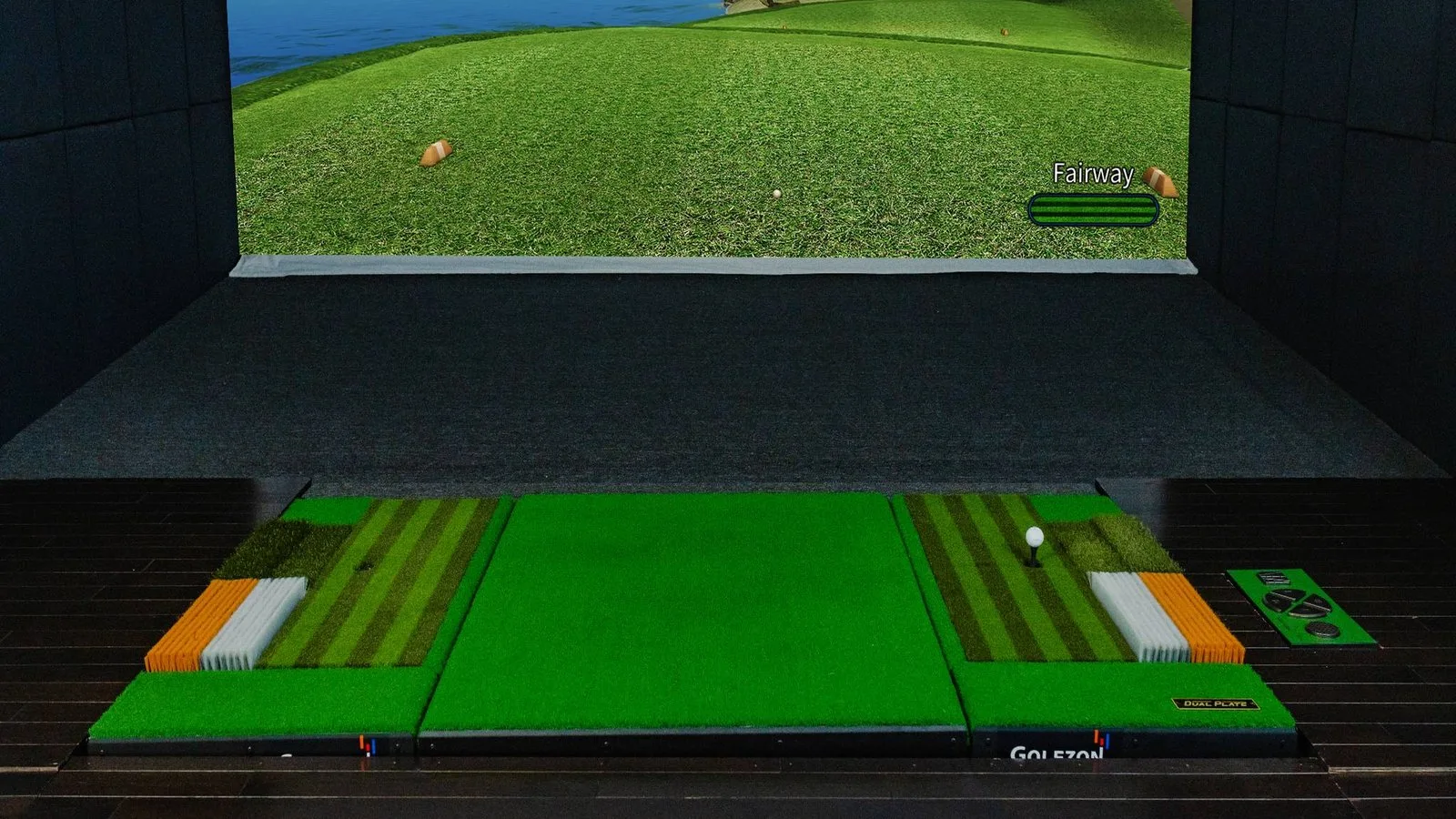
Listed one-bay rates on Sports Carnival mostly fall between $40 and $55 per hour, with $50 a common middle. A few premium lounges list higher, and some small-town or bare-bones bays list as low as $25 to $35.
Three patterns show up again and again:
- Price by the bay, not the person. Almost every venue charges per bay with a player cap, usually four to six golfers. Guests understand it instantly, and groups feel like they are getting a deal.
- Multi-bay bookings are simple multiples. Two bays cost twice one bay. Venues that want group business sell a party package instead of discounting the hourly rate.
- Weekend rates run higher. When venues split weekday and weekend pricing, the weekend rate usually lands $5 to $10 above the weekday rate.
What Should Move Your Rate Up or Down
| Factor | Pushes your rate up | Pushes your rate down |
|---|---|---|
| Market | Dense metro, few competitors | Smaller town, several simulator venues nearby |
| Hardware | Tour-grade launch monitors and large screens | Entry-level units, smaller bays |
| Experience | Bar, kitchen, lounge seating, private rooms | Bays only, no food or drink |
| Time | Weeknight evenings, weekends, winter | Weekday daytime, late night, summer |
| Booking window | Prime slots that sell out days ahead | Same-day slots that are still open |
If you are still choosing equipment, see the best golf simulator for business owners and what a golf simulator costs. Your hardware spend sets the floor your hourly rate has to clear.
When Golfers Actually Book
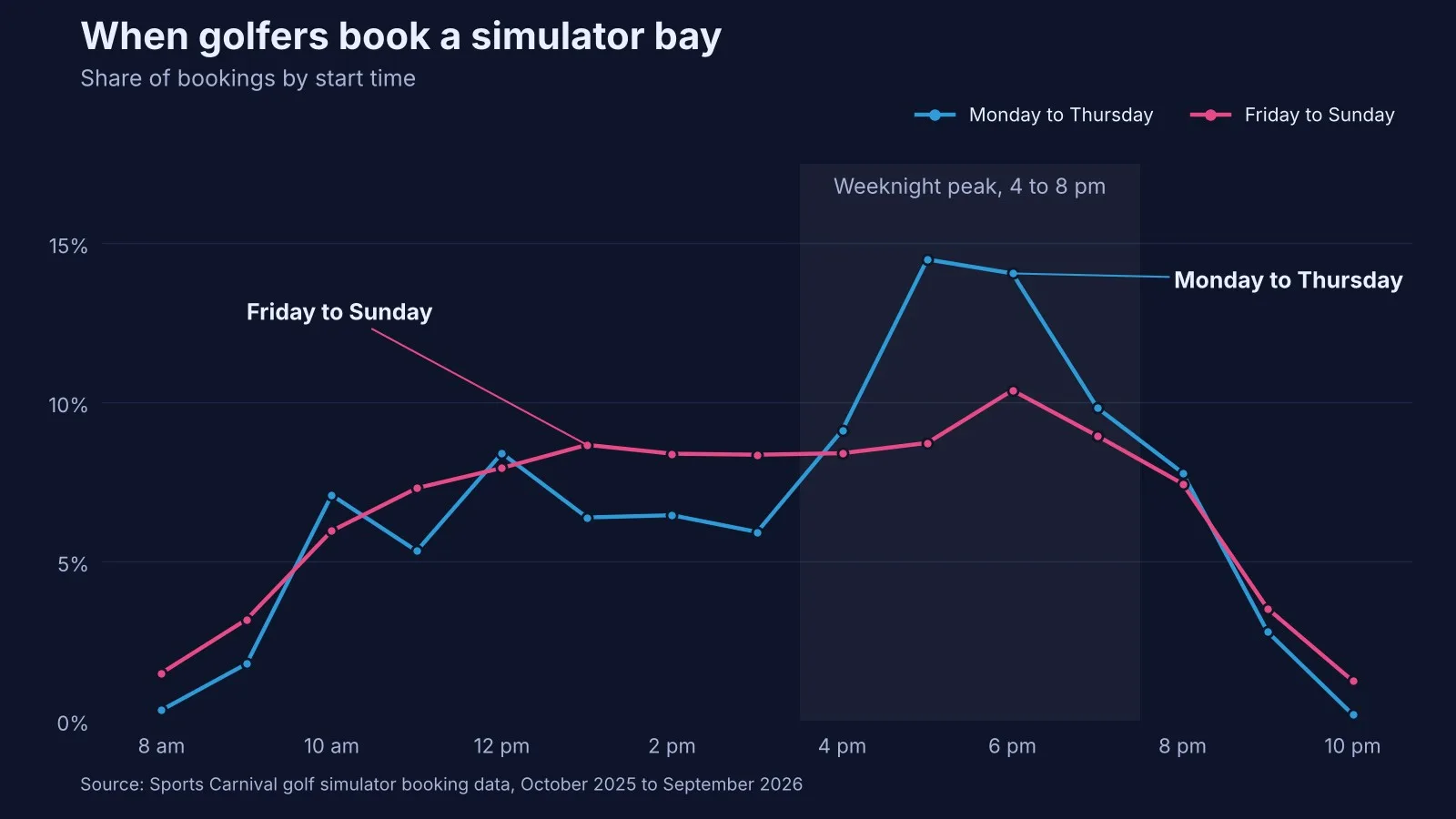
Your rate card should follow demand, so here is what demand looks like in Sports Carnival golf simulator booking data from October 2025 to September 2026. Weeknights spike hard at dinnertime, while weekends stay busy from noon on.
| Pattern | What the data shows | What it means for pricing |
|---|---|---|
| Weekends lead | Friday through Sunday is 53% of bookings. Saturday alone is about 20%. | Full rate, every weekend slot. |
| Weeknights peak at dinner | On Monday through Thursday, 47% of bookings start between 4 pm and 8 pm. | Full rate from 4 to 8 pm on weeknights. |
| Friday at 6 pm is the hottest slot | The busiest single start times are Friday at 6 pm, Saturday at 6 and 7 pm, and Wednesday at 6 pm. | These slots can carry a premium. |
| Daytime still sells | About 27% of bookings start on a weekday before 4 pm. | Discount, do not ignore. Retirees, remote workers and lessons fill it. |
| Sessions run long | About 40% book one hour, 36% book two hours, and about 17% book longer than two hours. | Sell two-hour packages and price the second hour with care. |
| Golfers book late | About 53% of online bookings are made the same day, and about 80% within two days. | Show live prices on every slot. Same-day shoppers decide fast. |
A Simple Peak and Off-Peak Rate Card
Start with one base rate, the price you would charge on a normal weeknight, then adjust around it. Here is an example built on a $50 base. Swap in your own number.
| Window | Adjustment | Example rate |
|---|---|---|
| Weekday, open to 4 pm | 20 to 25% off | $38 to $40 |
| Weekday, 4 pm to 8 pm | Base rate | $50 |
| Weekday, after 8 pm | 15 to 25% off | $38 to $43 |
| Friday evening and Saturday | 10 to 20% premium | $55 to $60 |
| Sunday | Base rate, or a small discount after 4 pm | $45 to $50 |
Keep it to four or five price points. A rate card your front desk can say out loud beats a perfect spreadsheet nobody understands.
Per Hour, Per Package and Per Season
- Two-hour packages. With about a third of bookings already running two hours, a two-hour price that is slightly better than two single hours nudges groups to stay longer without cutting your peak rate.
- Party and corporate packages. Bundle bays, a set time, and food or drink at one price. Take a deposit when they book.
- Summer pricing. Indoor golf slows when the courses open. Many venues lower rates from late spring through early fall, or lean on summer leagues to keep bays busy.
Revenue Beyond the Hourly Rate
The hourly rate pays the rent. These fill the hours it cannot:
- Leagues lock in weekly play in slower windows and bring the same groups back all season.
- Memberships trade a monthly fee for discounted or included bay time, usually in off-peak hours.
- Lessons and club fitting fill weekday daytime at a higher effective rate.
- Food, drink and add-ons raise the ticket without touching your bay price.
Dynamic Pricing: Let the Schedule Set the Price
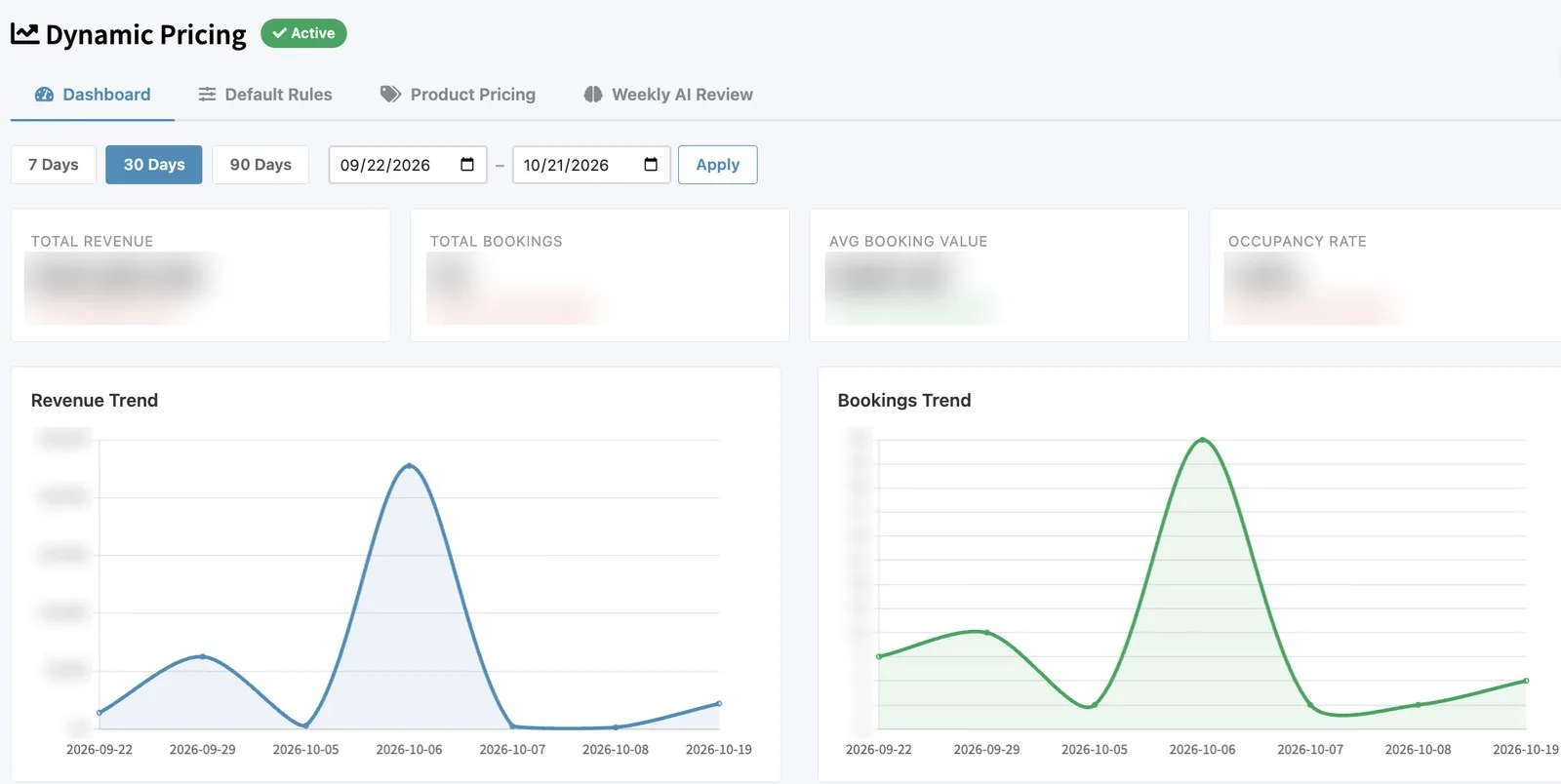
A rate card is a guess made once. Demand changes every day. Dynamic pricing adjusts each time slot automatically so busy slots earn more and empty slots get filled.
In Sports Carnival, dynamic pricing works from the signals that actually move demand at a golf simulator venue:
- Time of day and day of week: full price on Friday at 6 pm, a lower price on a Tuesday at 2 pm.
- How full the schedule is: when most bays are open, prices drop to pull bookings in. When a night is nearly sold out, prices hold or rise.
- How far ahead someone books: reward early planners or capture last-minute demand, your choice.
- Weather: a cold or rainy day pushes golfers indoors, and a perfect course day keeps them out.
- Seasons: run dynamic pricing in the slower summer months and switch back to flat rates for the winter rush.
You stay in control. You set a floor and a ceiling, so a price never drops below or rises above a range you approve. You can run it in test mode first to see what it would have charged before any guest sees a new price, and a weekly AI review suggests adjustments based on how the week actually booked. On the booking page, guests can see the price on every slot plus labels for savings and high-demand times, which helps same-day shoppers pick a slot fast.
9Yards Golf Lounge, a golf simulator franchise from the Pittsburgh area, uses dynamic pricing on Sports Carnival to keep slower hours moving. Founder Joel Warshaw put it this way after his first look at the system:
"Your software is everything I've been working on for the last few months to offer my customers! I love the discount and gift card options, membership and leagues with standings."
Joel Warshaw, 9Yards Golf Lounge
Dynamic pricing is included in the Marquee plan at $499 per location per month. See how it fits with booking, waivers and payments on our golf simulator booking software page.
How to Raise Prices Without Losing Regulars
- Raise peak first. Friday and Saturday nights absorb an increase best because they already sell out.
- Protect members. Keep member rates where they are for a season, or add a perk instead of a discount.
- Add value with the increase. New courses, better seating or a drink special make a higher price feel fair.
- Give notice. Post new rates a few weeks ahead on your booking page and in your email list.
Set Your Rates, Then Let Them Work
Pick a base rate in the $40 to $55 range, set full price for weeknight evenings and weekends, discount daytime and late night, and sell two-hour and party packages. Then watch how your bays actually book and adjust, or let dynamic pricing adjust for you. Book a demo to see dynamic pricing on a live golf simulator schedule.
Frequently asked questions
How much should I charge per hour for a golf simulator?
Listed one-bay rates on Sports Carnival mostly fall between $40 and $55 per hour, with $50 a common middle. Price toward the top of that range if you have premium hardware, a bar or kitchen, or little nearby competition, and toward the bottom in smaller markets or bare-bones bays.
Should golf simulators be priced per person or per bay?
Per bay. Nearly every venue we see prices by the bay, with an optional player cap of four to six. It is easier for guests to understand, it rewards groups, and it keeps your schedule simple. Multi-bay bookings are usually priced as a simple multiple of the one-bay rate.
When should golf simulator prices be highest?
Weeknights from 4 pm to 8 pm and weekends. In Sports Carnival golf simulator booking data from October 2025 to September 2026, Friday through Sunday made up 53% of bookings, and on Monday through Thursday 47% of bookings started between 4 pm and 8 pm. The busiest single start time was Friday at 6 pm.
How do I fill golf simulator bays during slow hours?
Discount weekday daytime and late evening, sell leagues and memberships that play in those windows, and offer lessons. About 27% of bookings already start on a weekday before 4 pm, so the demand is there at the right price. Dynamic pricing can lower prices automatically when bays sit empty.
What is dynamic pricing for golf simulators?
Dynamic pricing adjusts the price of each time slot automatically based on demand signals such as time of day, day of week, how full the schedule is, how far ahead someone books, and weather. The owner sets a floor and a ceiling, so prices never move outside a range they approve.
Should golf simulator prices change in summer?
Usually, yes. Indoor golf demand drops when golfers head outdoors, so many venues lower prices or add summer leagues from late spring through early fall, then return to full rates when the weather turns.
Continue Reading
Articles you might be interested in